How can a fax machine send words and pictures?
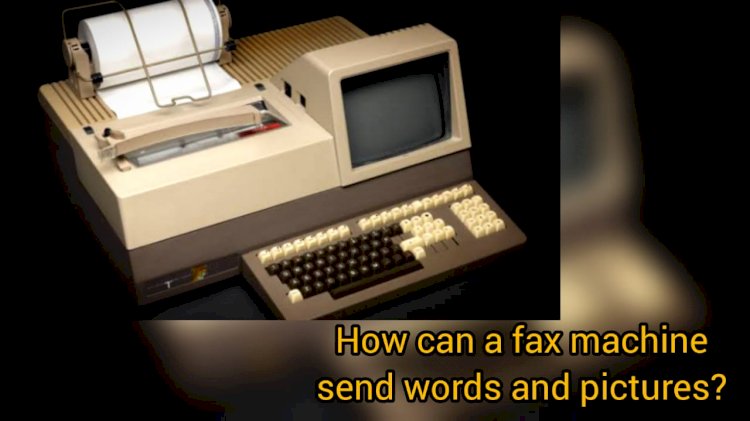
Fax machines are now not only used in offices but are also common in homes. But, have you ever wondered how documents are transmitted to faraway places without actually sending the original sheet? Isn’t it a mystery? Let us look at the mechanism behind it!
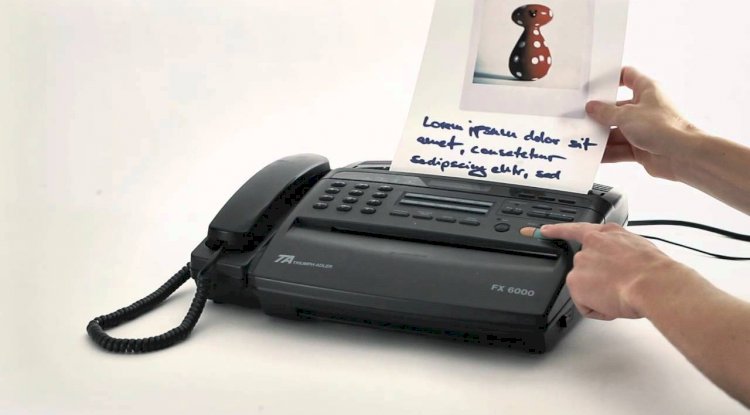
Nowadays there are fax machines in a large number of homes, isn’t it? Let us find how fax machines can transmit words and pictures. firstly, the machine needs to understand what sort of words and pictures are written on the paper. So, the first thing the machine does is, read the words and pictures. The machine sees the like vector image. But then the lines are so jagged and you can’t see the picture properly. A fine graph sheet with tiny squares covers it and the boxes with lines are considered black and those without lines are considered white. The black squares are smaller and the jagged lines are not jagged anymore. When you look closer at the pictures on the TV, you’ll find they are also just a collection of dots.

The fax machine disintegrates the manuscript like this into dots. The light is reflected onto the manuscript and is focussed on the lens just like a normal camera. This is read by CCD, a device which is similar to several tiny camera lenses that are lined up together. The electric signals that are so received are converted back into black and white patterns. These signals are again converted into the CCD pictures. Both Fax and TVs have the same mechanism. The black and white patterns of the pictures are converted through high and low voltages into electric signals. These signals are sent to the receiver. The speed at which the data can be transmitted by fax has become very high these days.
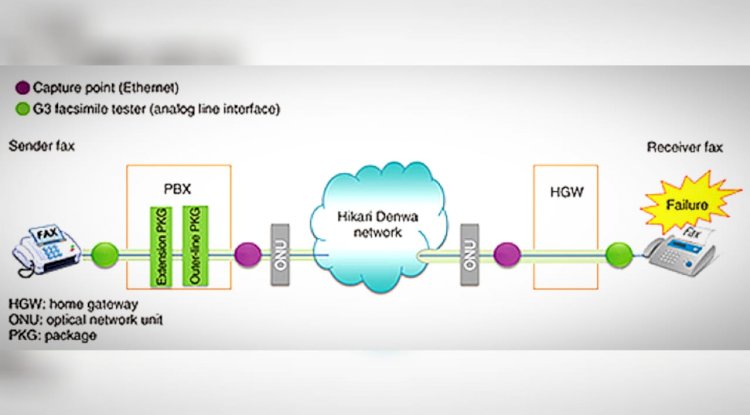
In the beginning, it took a home fax machine about 6 minutes to send an A4 size sheet. The machine reads every black and white electric signal the smaller the dots, the faster the transmission of data. When the amount of data was large, it took more time to transmit this. The arrangement of the white and black is converted into digital signals. It is arranged such as; black x 1, white x 1 black x 1 white x 1 black x 2 white x 2 etc. when compressed in this manner, the final data will get smaller. N order to transmit it faster, the data is reduced using digital signals. The technology has advanced to go this far. Now let us see how the signals are received and recorded onto the paper.
The pictures printed in the newspaper and magazines are made out of millions of dots. The photographs that are printed are also made out of such dots. To print it without impressing it on a board, a light source that is lined up like the CCD lens is shone upon the drum that is rolled with paper. The part of the drum on which the light falls is made out of material that can conduct electricity. The ‘toner’ or the powdered ink that is sprayed is attracted by static electricity and sticks onto the area where the light falls. The powdered ink that is stuck to the drum is printed onto the paper. To keep I from spreading, the paper with powdered ink is passed over heat. The thermal sheet which was used in the olden days used the heating mechanism instead of the light mechanism. The thermal paper was painted with a chemical that would darken when the areas were passed over heat.
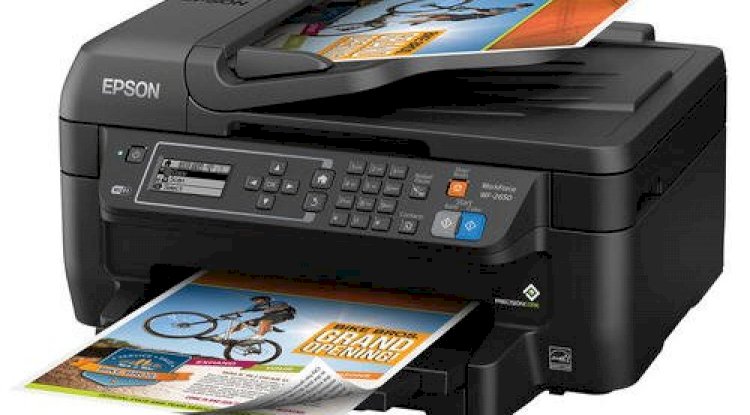
Recently coloured faxes can also be sent. The colours are also expressed through dots. Various colours can be made by mixing red, blue, yellow and black. The three basic colours are red, blue and yellow. These three colours along with white and black cannot be created by mixing other colours. It is just like paints. We can make many other colours by mixing primary colours. Hence to send a coloured fax a coloured toner is used. When the texture of the dots of the colour toner which is sprayed onto the surface of the white paper is altered, many colours can be produced. Well, let us take a look into the history of fax machines.
When people found that they can use electricity found for various purposes, there were a few who thought about using it for communication. At first, the Morse code was implemented using dots and dashes for words. This was in 1837. The words were expressed through a combination of dots and dashes and it was the primary digital signal. Samuel FB was introduced this way as an artist. As humans always wanted to achieve more, it was natural that he thought of sending pictures in this manner. It was in that he thought of sending pictures in this manner. It was in 1843 that Alexander Bain from England invented the fax machine. Well, this was older than the telephone.
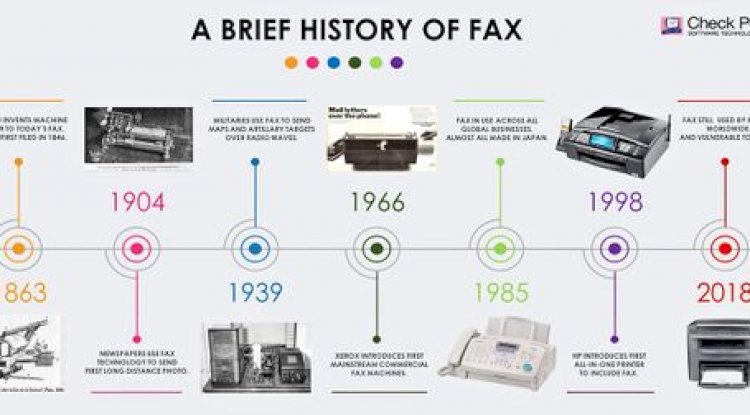
In 1848, Giovanni Casellifrom Italy first succeeded in sending the picture of Paris Leon Hall. In 1925, the actual machine was devised in America and by 1926 it was already being used in business. Earlier fax was sent through wireless communication. After alexander graham bell invented the telephone in 1876, fax has been sent generally through telephone lines. Well, that was about 33 years after the fax machine was invented. The fax was studied even before the telephone. It is astonishingly old technology.
Finally, let us take a look at the fax machine of late. Fax is truly a very useful device. You can also make a copy by fax, isn’t it? The theory of printing the pictures and words onto another sheet of paper is the same as making multiple copies of the original. By removing the part which is used to read the original document, it can be used as a copier. So, it is also possible o send materials such as books. Fax can be sent automatically and so it is no longer necessary to be present near the machine. As the transmission is automatic, the weather report information can be sent to the ships right away without waiting for the broadcasting timings. There might be a thunderstorm. Please change the route of the ship. Fax is very useful as it helps in transmitting a large number of information very quickly. The latest technological developments are very useful for our daily lives. As fax machines are so commonly used around us today, we can expect more developments in their functions soon.
What's Your Reaction?