Is there a clock inside our body?
You forget to set the alarm but still, you naturally wake up at the usual time. Or if you keep awake secretly all night, the next day you can’t open your eyes in the morning. Sleep and many such activities are controlled by an invisible clock in our bodies that sets its rhythm. Let us find out about this mechanism in our bodies.

When you travel for hours together, at a stretch, from one place to another and there is a difference in time between the two places, your body begins to function abnormally. This is called ‘jet lag’. Years back when people used to travel from one place to another for a few weeks on ships, there was no jet lag. But now, to go to a faraway country we use jet planes. The time difference between Japan & New York is 14 hours. Now, for instance when Japan starts its New Year on 1st Jan, 0:00 hrs. During the time of propellers too, there was no discomfort due to jet lag because the planes used to stop for refuelling in between. That’s why our bodies suffer from jet lag. If you take a flight from Tokyo to New York in the morning, don’t expect them to reach New York at night.

The international date line is at 180 degrees east longitude on the Pacific Ocean (east of Japan) and so Japan gets to the next day earlier. In New York, it is still New Year’s Eve, 10:00 p.m. From Tokyo to New York, it takes 12 hours in a jet plane. You will be reaching New York in the morning, on the same date that you left Tokyo. But after six hours of flight the body will feel, ‘Oh, it’s lunchtime.’ Again, another six hours it will think, ‘Oh, it’s night-time.’ Around that time the flight will land in New York. So, though it is time for the body to go to sleep, you will find that the sun is high up in New York and it is time to start working. If you check into the hotel and go off to sleep, it will become difficult to sleep at night.

Jet lag occurs because of the time difference between the departure country and the arrival country. The upsets the rhythm of the body. Jet lag proves that there is a clock in the body. Humans have always taken the sunrise as the time to wake up and sunset as the time to retire for the day. We have set our lives to match the movements of the sun. This is why the human body is built with a lifestyle rhythm based on 24 hours cycle. The body clock is also guided by the moon as it waxes and wanes. This takes around 29 days and is known as the lunar month. This is because the moon takes about a month to go around the earth. Sea tides are also the result of this cycle. Other living beings are also influenced by this.

It takes around a year from one spring to the next. This is because the earth takes about a year to go around the sun once. This has a great influence on our bodies and lifestyle. This kind of mechanism that works in coherence with nature creates a rhythm and is called the ‘body clock’. Anyway, a few experiments have been conducted to prove this. People were made to live in a place where there were neither clocks nor any sunlight. Further, a ‘touch-me-not plant was placed for a whole day in a room with a certain amount of light. At night the leaves closed and when it was daytime, the leaves opened up again. This can be observed in other living beings as well. It is also understood that over a long period the rhythm gets disturbed. but it was found that despite not knowing the exact time, people woke up at about the same time they usually woke up. Even without the influence of the sun, the body clock seems to be setting a rhythm roughly once in 24 hours. This 24-hour rhythm that is inherent in the body is called the circadian rhythm.
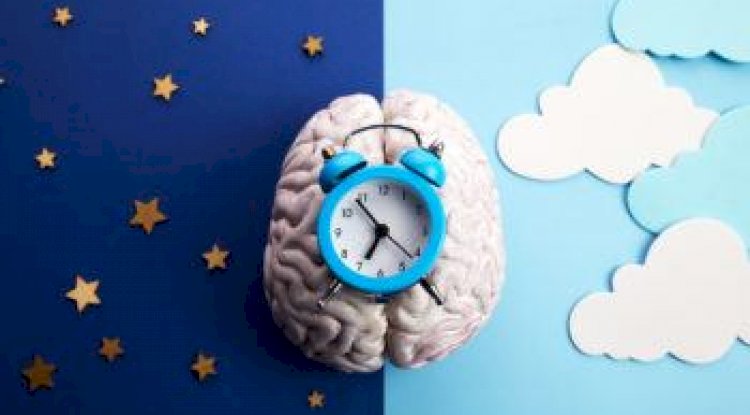
Many living organisms are provided with the body clock; however, depending on the mechanism and the place, there can be some variation. The body clock is a phase of the evolution of living organisms and it ensures that gradually a specific cell takes control. Initially, it was present in the eyes (light sensing organ), in vertebrates, it is present in the brain. In researching birds like swallows, it has been found that the pineal gland in the brain plays a vital role in creating the circadian rhythm. The pineal gland secretes the melatonin hormone. Also, in the lower animals, it helps in realising the sensation of light.
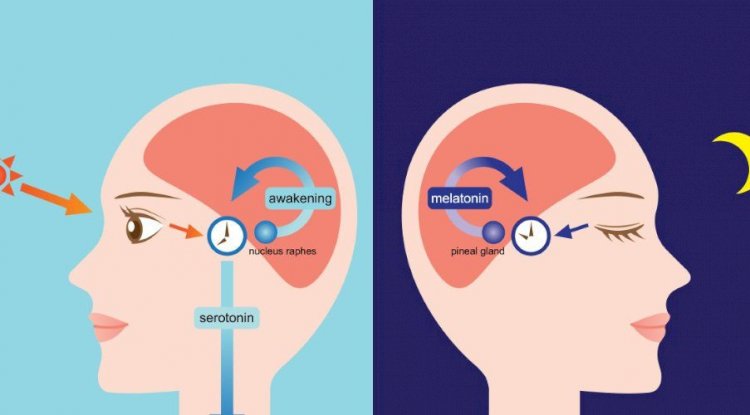
In an experiment, the pineal gland was removed but still, the circadian rhythm did not stop. However, when a small part called the suprachiasmatic nucleus was removed from the hypothalamus, the rhythm vanished. In the case of humans, it has been found that the melatonin secreted by the pineal gland greatly influences the 24-hour rhythm of the body. The secretion is regulated by the hypothalamus and when the balance is disturbed, it affects the walking and sleeping time. The exact location of the body in humans is still unknown. It is only presumed that these parts of the brain might be influenced.
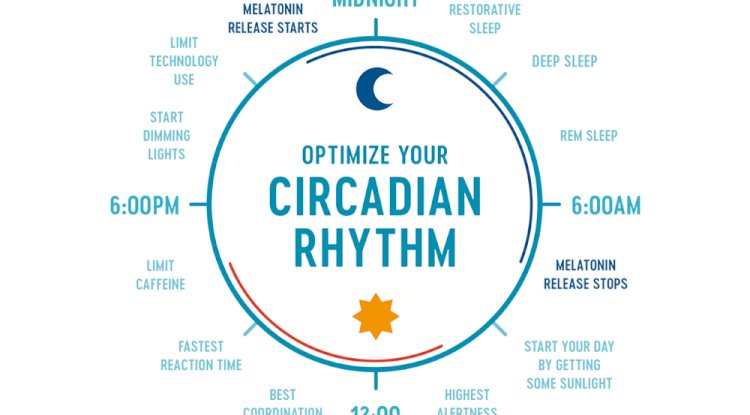
The autonomic circadian cycle in living organisms approximately works between 22-28 hours. It is said that the circadian rhythm of human beings is about 25 hours. Even if you wake up at 7 o’clock with an alarm. The body clock feels like it is only 6 o’clock. However, the body clock can be in sync with the outer environment. If we prepare for the activities after feeling the brightness of the morning the body can adjust itself and speed up the procedure to start the activities. So, the body resets its body clock by bathing in the sunshine, isn’t it? However, the body clock needs at least four hours, plus or minus, to adjust itself.
Research on the body clock has opened new fields of study about the human body. So, all living organisms have a very vital mechanism called the body clock, which helps them to create a rhythm to adjust to the changes that come with the changes in light and climate.
What's Your Reaction?