How does Indian Classical Music impact mental health?
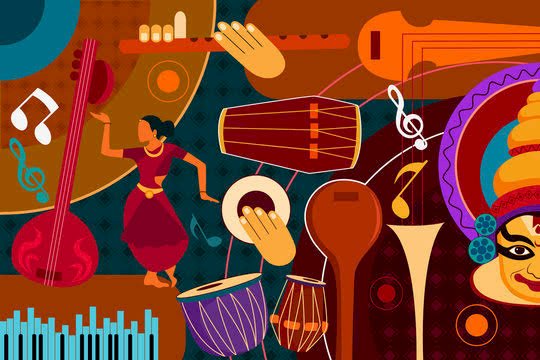
Music is one of the best, greatest and purist forms of creation by mankind. Music plays a more important role in our life than just being a source of entertainment as it can express our feelings as well as emotions which are of course connected to our daily life. Music has the power to reduce stress, calm one down and also make you happy, cheerful and relaxed. Especially, Indian classical music is rich in terms of ragas which contain different rasas or bhavas or emotions. But it is a fact that for a normal listener, the acceptance or interest is less in classical music, as compared to the light music genre. The reason behind this is that to understand the Indian classical genre, it is important to know the technicalities, system and style of presentation, says Dr Rejisurendran, Vocal Coach at Furtados School of music, Mumbai.
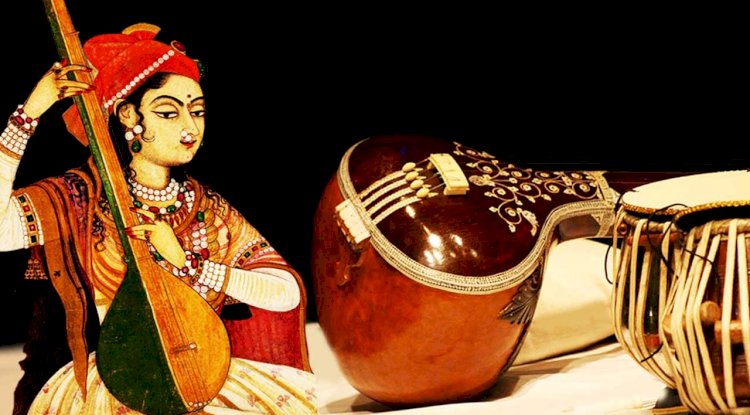
The alignment of the raagas with the time of day and its association with emotions or rasas, Indian classical music sets the stage for spiritual and physical healing As humans, living through everyday stresses, as well as deeper life struggles, can have a degenerative effect on our minds, bodies and spirits. This degeneration appears in myriad forms – as maladies of the body, emotional upheaval and as spiritual unrest. Nature, on the other hand, is innately regenerative. So, it is no surprise that things that are intricately linked to nature and creation seem to have a profoundly healing effect, like a beautiful sunrise or a cool breeze, and of course, music! In my years of singing, performing as well as living through my share of life upheavals, I’ve come to witness some rather amazing effects that it has had on people. For instance, a chain smoker successfully left behind years of smoking within a few months of commencing learning Indian classical music. Another instance is that of a grandmother who was accompanying a child to her Indian classical music lessons and found herself freed from the grip of a nagging pain that had plagued her the previous few hours.
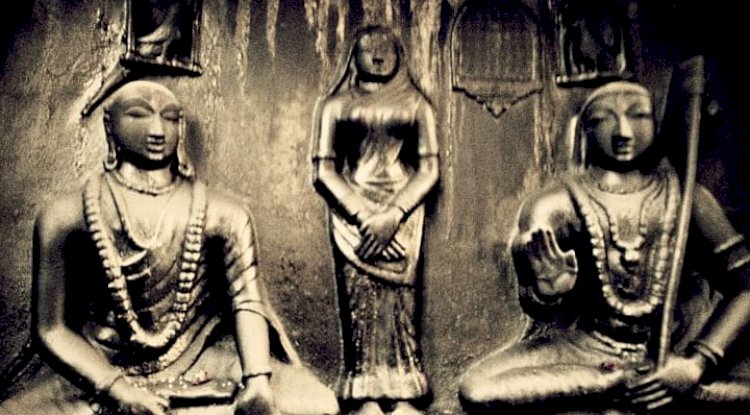
Originating in the Vedic period, when the great emphasis was placed on musical notation and sound in reciting the Vedas, especially the musical Sama Veda, Indian classical music has evolved over the centuries, to attain the grandeur, depth and expanse of an ocean. Ragas — the basic unit of classical music — are truly oceanic in nature — however deep you go into a raga, there is still scope to dive deeper — an exploration that elevates the soul and suffuses it with deep joy. Different forms of raga-sangeet like dhrupad, dhamar, khayal, tappa, thumri, and ghazal, budded and blossomed in different periods of history and different regions of the country, in sync with changing human needs. Also, old film music, mainly Hindi film music, was firmly moored in ragas. Great music composers like Naushad, S D Burman, Anil Biswas, C Ramachandra, Jaidev, Roshan, and Kalyanji-Anandji, who were cognisant of Indian ragas and taals, used this knowledge judiciously to compose melodious songs, which continue to resonate in the public consciousness to date and raise spirits. Gems like Chandan sa badan, Khilte hain gul yahan, Pyaar kiya to darn kiya, Laga chunri mein daag, Hamein tumse pyaar kitna, Prabhu tero naam. Thus, everyone from a serious music student/artiste to the common man can enjoy this music in at least one of its different forms, and benefit from the association.

The mind and music
A key mechanism through which Indian classical music heals is through establishing a connection with a person’s emotional being. Indian Raagas connect with a person’s emotions through two processes - identification and transformation. Identification happens, for example, when a person in a sombre or sad mood, hears a raag that brings out the sadness through its flat, or ‘Komal’ notes, like Raag Lalit or Raag Bhairav. In that case, the emotions are identified with something powerful outside of the person and therefore find release through a cathartic crying or welling up.
Transformation happens when the mood of a raga influences the listener’s emotional state. For instance, listening to a “happy” Raag like Bhoop or Bilawal may transform his or her mood from sad to happy, because of the major notes and the upbeat moods these raagas create. Since emotional states greatly determine mental health and wellness, Indian classical music has enormous potential to create a state of mental well-being in a person.
Indian classical music, due to its organic origins, has the potential to bring us closer to our inner being. Besides mood-transforming powers, Indian classical music has powerful effects on a person’s ability to be mindful, as it makes us more emotionally aware. Sur Riyaaz (pursuit of the perfect key), playing an instrument, trying to sing ragas or even listening to the drone of the taanpura, allows us to easily slip into meditative states. All these aspects of engaging with Indian classical music powerfully aid healing processes to kick in. While the manner of engaging with Indian classical music can be varied, there is always undoubtedly a profound impact, resulting in a better emotional, mental and physical state.
The benefits of classical music, which was originally conceived by our ancient rishis as a way to access the supreme godhead or the universal self, are many and profound. Raga-sangeet prepares you for life, as it reflects its nature. A raga offers you a definite musical framework (built with musical phrases) within which you are free to create infinite melodic patterns. Thus, this music both disciplines you and allows your creativity to flourish. To lay listeners, classical music offers peace. It calms the agitation of the senses and induces deep contemplation and clarity about oneself.
What's Your Reaction?












