How Nature, Technology and Institutions Are Interdependent?

Technology – as we have defined it – is not unique to humans but that examples of technology can be found in nature. Next, we review the concepts of bio-inspired design and biomimetics which are the application of biological principles to artificially created technology. Increasingly, with the emergence of biological engineering, we are starting to understand (or are rediscovering) how nature itself can become technology. Finally, we consider the emerging notion of “cyborgs,” which are humans that have inserted technology into their bodies or are using technology to modify their bodies. These possibilities have given rise to the new field of bioethics. We can increasingly modify or create biology-based systems and technologies, but should we? Since humans are biology-based animals and are part of nature, some argue that all technology is inherently “natural.”

The word “nature” has different meanings. It can refer to the total biological scope of the planet Earth. It can also include the total ecological system of the material world. “Mother Nature” is a term used to describe the whole ecological system on the planet Earth. In philosophy, it can refer to the essence of something. Likewise, theologically, the nature of something is that which makes something that it is. It is the most basic essence of something. We would say that the nature of God is good, holy, just, immutable, etc. If we were to take any one of these properties away from God in describing His nature, He would cease to be what He is. The nature of something deals with the essential properties that make something that it is.

Technology is the result of accumulated knowledge and application of skills, methods, and processes used in industrial production and scientific research. Technology is embedded in the operation of all machines and electronic devices, with or without detailed knowledge of their function, for the intended purpose of an organization. The technologies of society consist of what are known as systems. Systems operate by obtaining an input, altering this input through what is known as a process, and then producing an outcome that achieves the intended purpose of the system.

Institutions are humanly devised structures of rules and norms that shape and constrain individual behaviour All definitions of institutions generally entail that there is a level of persistence and continuity. Laws, rules, social conventions and norms are all examples of institutions. Institutions vary in their level of formality and informality. Institutions are a principal object of study in social sciences such as political science, anthropology, economics, and sociology. Institutions are also a central concern for law, the formal mechanism for political rule-making and enforcement. Historians study and document the founding, growth, decay and development of institutions as part of political, economic and cultural history.
Nature, technology and institution are interdependent through a medium called humans. Humans interact with nature through technology and set up institutions for the production of products.
Suppose you decide to live with nature only, striving to be nature and become completely free of the ego or the ‘I’, bondage. You start with breathing, smelling and sensing and identifying with the smell tags. You begin interacting with the smells first by acting but gradually by exhaling your smell responses. You smell it and smell out. You notice that many organisms are responding by exhaling the smell responses. Your eyes begin creating images, with abstract features, features which are not the 3D of the visible spectrum. The abstract aura of everything creates life which is expanding and responding. You no longer see but feel. You feel a life of feelings everywhere and not things at all.
Gradually you free yourself from mechanics, where things interact with things with no emotions and feelings. You develop the inverse life where you find that when you use a machine, your capacity to feel gets reduced and when you do not use machines your capacity to feel and sense increases. It is simply,’ the more the technology, the less the feeling, and the more the feeling, the less the technology.
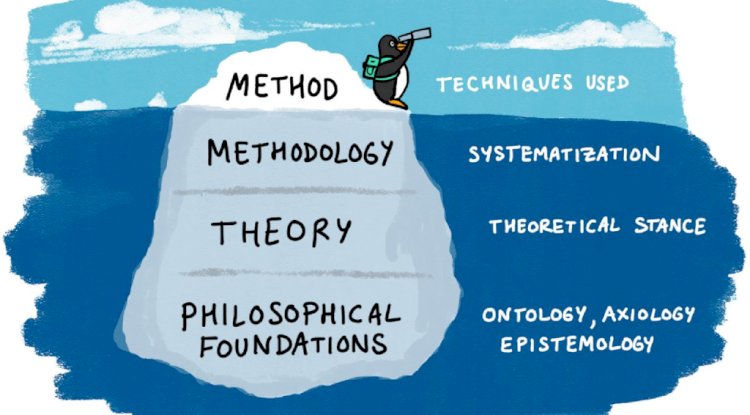
Today we need a concept base to connect, to understand. If there is no concept base and a paradigmatic foundation, you cannot understand at all. But when you change to smelling, sensing and feeling, you begin experiencing understanding directly as part of breathing, with no need for the connecting concept base and a paradigmatic foundation. The basic difference is, in the case of breathing, smelling and sensing, you need nature, and as you advance in the perception based on inhaling and exhaling, you expand the area of nature in the reach of understanding. The more nature, the more understanding. Ultimately, you find every nanometer of nature, receiving and giving smell messages, which change into automatic feeling and sensing.
Technology is developed with the nature and natural resources of the place; technology is developed for man's facilitation. Institutions develop technologies based on resources. These technologies are used to utilize better resources which expand the institutions, and in return, those institutions develop better technologies for better utilization of resources. Ultimately, quantum entanglements at the sub-atomic level, of the atoms of the molecules of your body, take over converting you into radiations of perception and interaction. Your body sees itself as what it is, the abstract, organ of the abstract Universe.
You become the Universe.
What's Your Reaction?