What Diamonds were stolen from India?
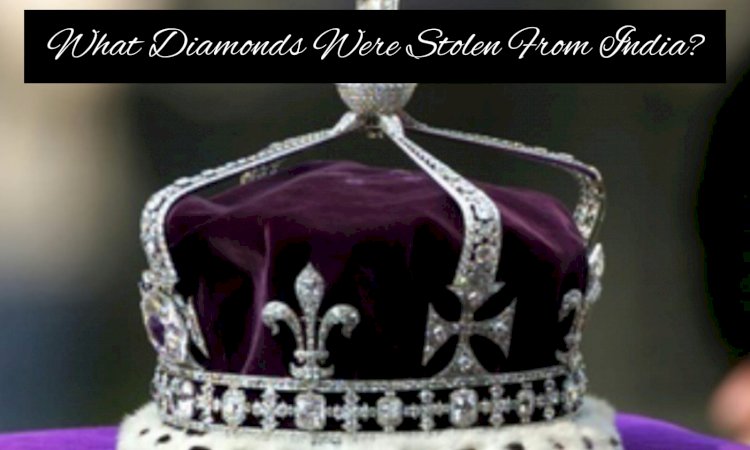
Indian royalty has always been synonymous with exquisite jewels. It is not new that the jewels of India have played a significant role in Indian history. India’s jewellery is a striking reflection of the country’s aesthetic and cultural history, with a 5,000-year legacy. They are beautiful, natural, and have the iridescence of a star. Indian mines have produced many historical diamonds that ornament the crowns and museums around the world. Let’s look at these legendary jewels that travelled around the world. These precious jewels of India are now a part of crown jewels and museums.
1. Hope Diamond
- Extracted from: Kollur mine, Guntur.
- Now: national museum, united states
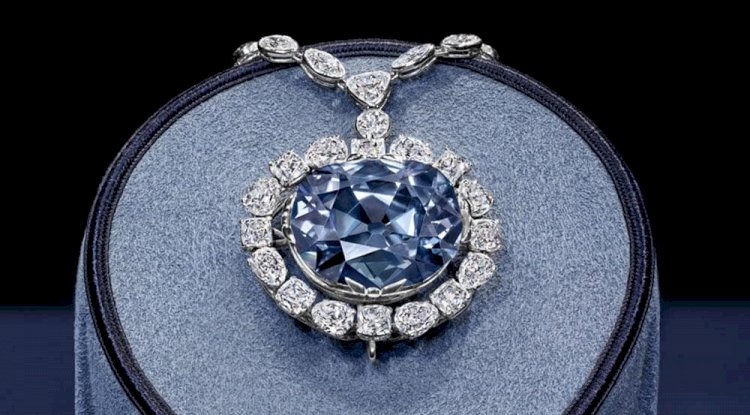
The Hope Diamond is a 45.52-carat diamond that was extracted from the Kollur Mine in Guntur, India, in the 17th century. Due to the trace amounts of boron, it has a blue colour. The stone is known as a Golconda diamond. The Tavernier Blue diamond was purchased by French gem merchant Jean-Baptiste Tavernier in 1666, according to the earliest records. Tavernier sold the stone to King Louis XIV of France in 1668 after it was cut and called the French Blue (Le bleu de France). It was lost in 1791 and re-cut, with the largest section of the diamond appearing in an 1839 gem catalogue from the Hope banking family under the Hope name.
The diamond has had many renowned owners, including Washington socialite Evalyn Walsh McLean, who was frequently seen wearing it. Harry Winston, a New York gem merchant, purchased the diamond in 1949 and toured it for several years before donating it to the National Museum of Natural History in the United States in 1958, where it is on permanent exhibition.
2. Daria-I-Noor Diamond
- Extracted from: Kollur mines, Guntur
- Now: Iranian crown jewels collection at the central bank of Iran.
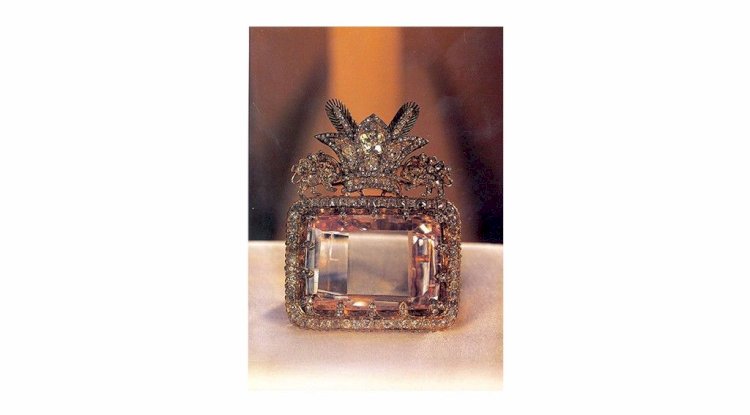
The Daria-I-Noor is one of the world’s largest cut diamonds, weighing an estimated 182 carats. Its pale pink colour is one of the rarest in diamonds. This Indian diamond was discovered in the Kollur mine in the Indian state of Andhra Pradesh. It was one of the jewels of India and was originally owned by the Kakatiya dynasty and later by the Delhi Sultanate’s Khalji dynasty and Mughal emperors. It was part of the Peacock Throne of Shah Jahan. Nader Shah of Iran invaded Northern India and occupied Delhi in 1739. In exchange for returning the crown of India to the Mughal emperor, Muhammad, he took possession of the Mughals’ entire fabled treasury, including the Daria-i-Noor, as well as the Koh-I-Noor and the Peacock Throne.
Sharukh Mirza, Nader Shah’s grandson, inherited the diamond after his father died in 1747. It then fell into the hands of Lotf Ali Khan. Following Lotf Ali Khan’s defeat at the hands of Mohammad Khan Qajar, who established Iran’s ruling Qajar dynasty, the Daria-I-Noor was transferred to the Qajar treasury. The diamond is currently housed in the Iranian Crown Jewels collection at the Central Bank of Iran in Tehran.
3. Noor-Ul-Ain diamond
- Extracted from: Golconda mines, Hyderabad
- Now: Iranian crown jewels collection at the central bank of Iran.
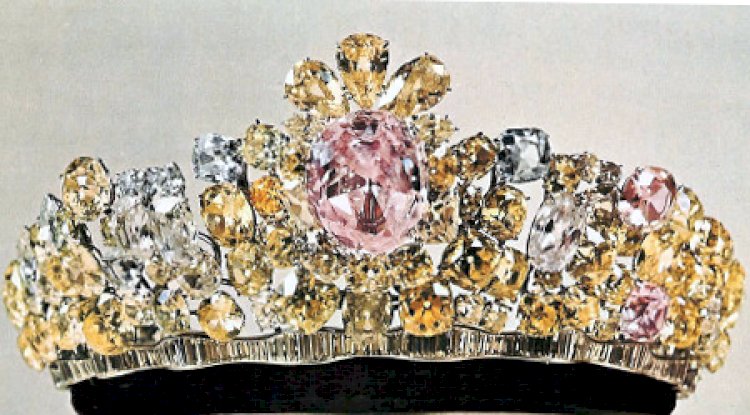
The Noor-Ul-Ain, the tiara’s centrepiece, is one of the world’s largest pink diamonds. The diamond is believed to have been recovered from the Golconda mines in Hyderabad, India. It is one of the jewels of India and the first in possession of the nizam Abul Hasan Qutb Shah. The jewel was later given as a peace offering to the Mughal emperor Aurangzeb after he defeated him in a siege. In the 18th century, it was into the Iranian Imperial collection by Persian king Nader Shah Afshar.
The Noor-Ul-Ain is believed to have been part of a much larger gem known as the Great Table diamond. The larger diamond is thought to have been cut in two, with one section becoming the Noor-Ul-Ain diamond and the other becoming the Daria-i-Noor diamond. Both of these pieces are currently housed in the Iranian Crown Jewels.
4. Hortensia Diamond
- Extracted from: Golconda mines, Hyderabad
- Now: Galerie d’Apollon of the louvre museum, Paris.
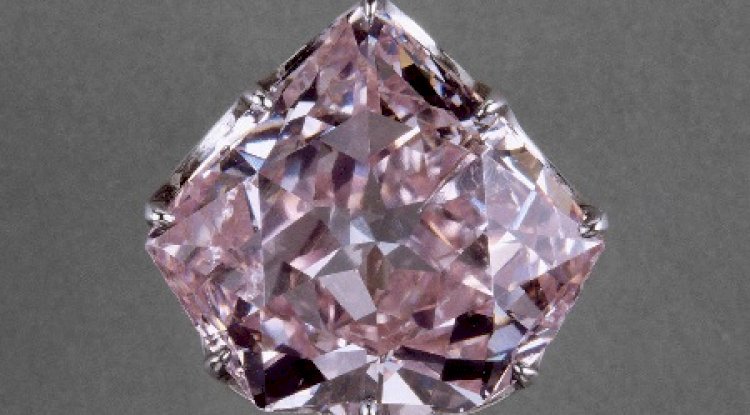
The Hortensia diamond, one of the Golconda Diamonds, was mined in India and is now part of the French Crown Jewels. It’s a 20-carat pale orange-pink diamond cut into a five-sided shape with a “feather” (a fine visible crack) running from tip to girdle. The Hortensia was purchased by King Louis XIV of France in 1643 and remained in his possession until 1715. During the French Revolution, it was stolen in 1792 from the Garde-Meuble de la Couronne in Paris (now the Hôtel de la Marine). It was discovered in an attic in Paris’s Les Halles district. It was stolen again in 1830. This time from the Ministry of the Navy, but recovered shortly after. The Hortensia is on display at the Galerie d’Apollon of the Louvre Museum in Paris.
5. Shah Diamond
- Extracted from: Golconda mines, Hyderabad
- Now: Diamond Fund Collection of the Kremlin Armoury, Moscow.
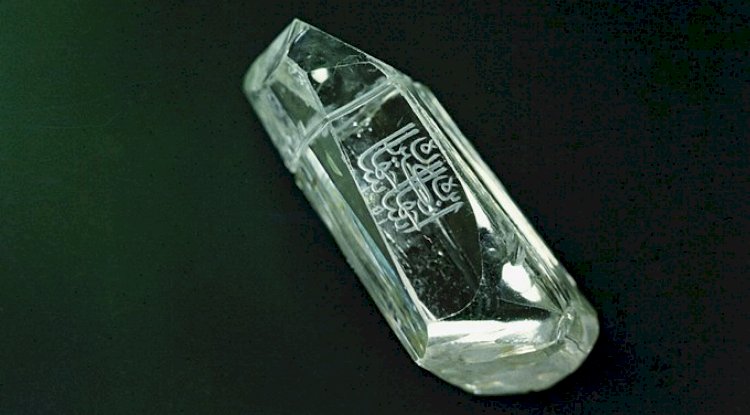
The Shah Diamond, also known as Akbar Shah Diamond, was discovered in 1450 at the Golconda mines (now in Andhra Pradesh, South India). This diamond is not of the first water, as it has a yellowish tinge due to iron oxide at the surface. It is said to have weighed 95 carats before being cut, and it lost 9 carats after. It currently weighs 88.7 carats. It is an elongated octahedron with fifteen facets replacing the eight original faces. It is frequently described as having the shape of a coffin.
The diamond first belonged to Akbar the Great, the third Mughal Emperor who reigned from 1556 to 1605, one of India’s greatest emperors and the architect of the modern secular state. After Akbar Shah’s death, it was passed on to his successor, Emperor Jahangir Shah, who had it inscribed for the first time in 1619 A.D. Several inscriptions were made on the diamond. The diamond remained in the dynasty’s treasury until 1739, and later it disappeared for over a century. The diamond was later discovered and purchased by an English merchant named George Blogg, who re-cut it into a 73.60ct pear-shaped diamond. It is currently held in the Diamond Fund collection of the Kremlin Armoury in Moscow.
The diamond came from India’s alluvial mines thousands of years ago, sifted from the sand. According to Hindu belief, it was revered by gods like Krishna—even though it seemed to carry a curse if the luck of its owners was anything to go by. The gem, which would come to be known as the Koh-I-Noor Diamond, wove its way through Indian court intrigues before eventually ending up in the British Crown Jewels by the mid-1800s. That was when a British amateur geologist interviewed gemologists and historians on the diamond’s origins and wrote the history of the Koh-I-Noor that served as the basis for most future stories of the diamond.
What's Your Reaction?












