What is the reason behind clocks telling the exact time?

The alarm clock wakes us on time in the morning. Watches convey time anytime and anywhere. There are so many clocks around us, isn’t it? What is the mechanism of these clocks, let’s examine that. What does a clock do is, expresses a common convention related to time and moment? What would happen if clocks were not there? The office meetings wouldn’t have been possible, sports records cannot be saved and the time to reach mars wouldn’t be possible. In today’s life clocks is a necessity.
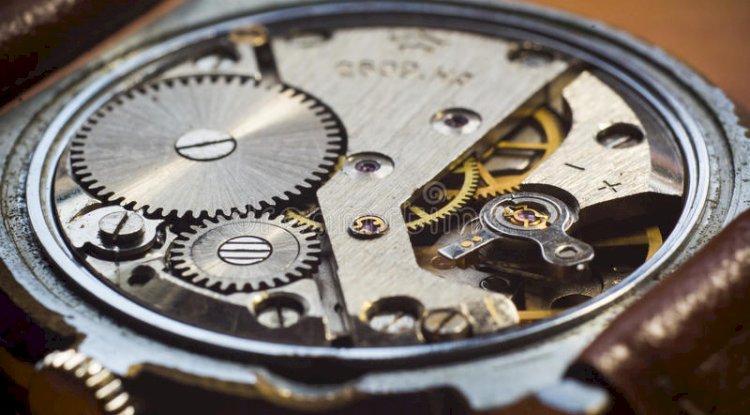
Spring wristwatches are not seen nowadays, but the structure of the spring wristwatch is the major role played by the escapement wheel, the ankle and the temp. the spring can be would even by little strength and is made by a combination of gears. The spring gets rolled by the winding of a watch stem. Depending on the hairspring, temp is controlled. The escape wheel rotates in a uniform rhythm according to the right and left turning of temp; thus, enabling it to deliver time precisely. The temp, the ankle, and the escape wheel together are known as the escapement. Its strength varies when spring is winded and when spring is loosened. In such cases, the exact time cannot be delivered but luckily the escapement is not affected by the changes in spring strength.
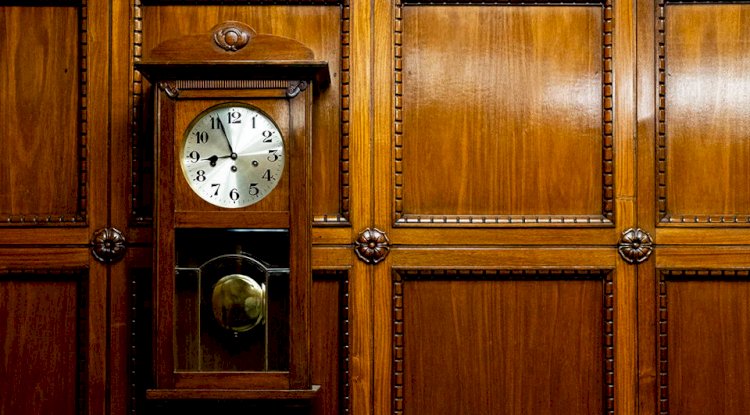
Now let us examine the PENDULUM CLOCK. the isochronous pendulum clock is applied in practical use as the clock is the pendulum clock. The short pendulum oscillates fast while the long pendulum oscillates slowly. Regardless of its speed, the time for a round trip is constant. This is known as the “Isochronous Pendulum” and was discovered in 1583 by scientist Galileo Galilei of Italy. The driving force is obtained from the suspended weight. The pendulum controls the suspension rate of weight. Besides weight, spring is also used. By adjusting the length of the stick, the period of the second can be accurately measured. Christian Huygens of holland applied this practically in clocks. The clock is made by him ticked time accurately.
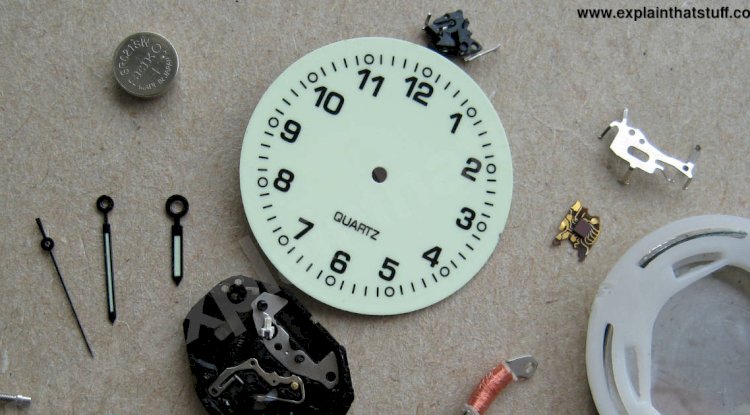
Present-day clocks are operated by batteries. It not only rotates the motor electronically but it also uses the crystal; oscillation technique. If electricity is passed on crystals, small but fast oscillations are possible to a level of 32768 times per second. By using this feature, 1 second is counted by the oscillation of 32768 times. Quartz clocks were accurate because even if 1 unit of crystal oscillation slips only 1 second out of 32768 gets out of order. The most advanced among clocks for home use and personal use is the “radio clock”. Calculation error is minimal as it receives accurate time information through radio waves. even if a moment lips from the clock, it is automatically rectified through radio waves. These radio waves known as “Standard Radio Frequency” is used in TV, radio announcement services etc.
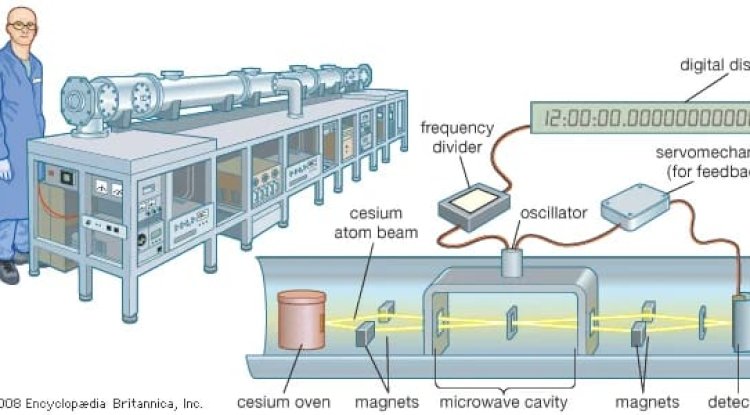
In India, these radio waves are transmitted from New Delhi and can be received anywhere throughout the country. The caesium atomic clocks maintained at the national physical laboratory, in New Delhi are linked to other such atomic clocks instituted all over the world through a set of global positioning satellites. Clocks are devices measuring steady rhythm. Hence it uses complicated technology.
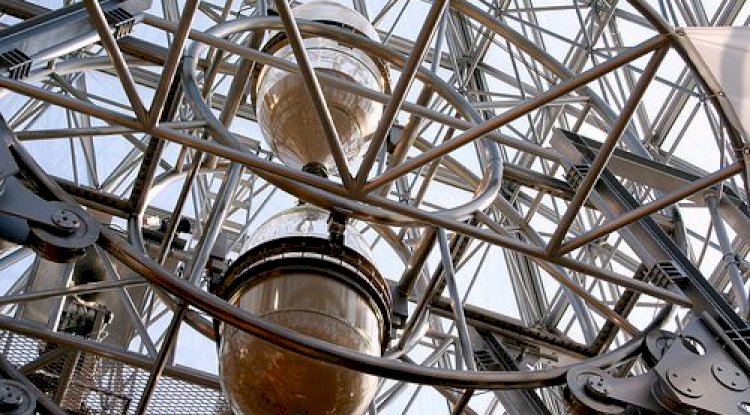
Nima Sand Museum in Shimane prefecture has the world’s biggest sad clock the “Sand Calendar”. It measures 5.2 meters in height and 1 meter in diameter and it can measure one year.

The simplest time mechanism is seen in a “sundial”. A pole is made to stand at a place where sunlight is not interrupted. This idea was thought of by the Mesopotamia civilisation over 4000 years ago. But, on cloudy or rainy days, it was not possible to get the shadow of the pole, and time could be measured only when the sun was out during the daytime. People must have worried when it rained. the position of the shadow changes as the sun moves. Time is known from these shadow positions. There are many kinds of clocks: -

Sand Clock: - it is so adjusted that sand falls at a fixed period.
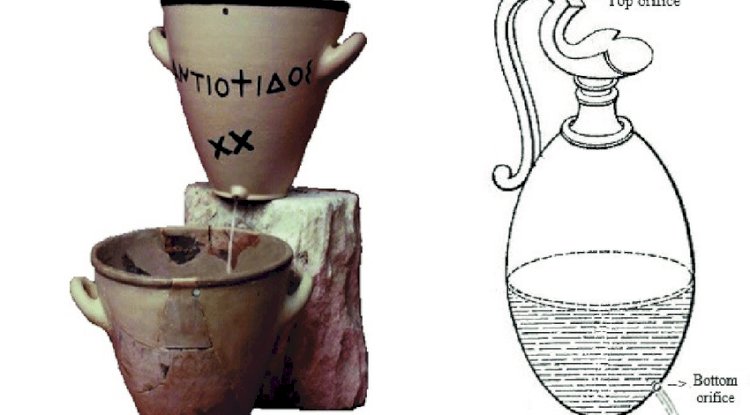
Water Clock: - based on the condition of water collected into a container kept blow, “How Much” can be measured.
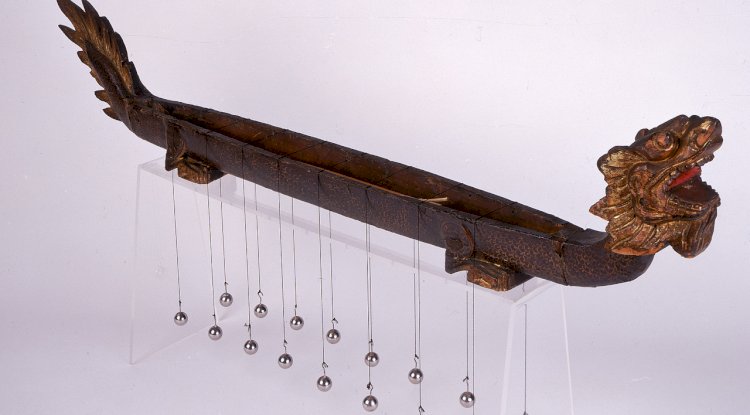
Fire Clock: - Lamp clock was used by Germans in the 18th century. Depending on the reduced status of fuel, the time elapsed was known. It also provided light at night.
The structure of water clocks soon became complicated. The Chinese were enthusiastic about making water clocks. The water clock is available since the 6th century BC. How much ever steps were divided as well as, the speed of flowing water was maintained throughout. Once again, by the 11th century, it was the Chinese who built the Astronomical clock system in which the Armillary Sphere (Astronomical observation device) and celestial Globe (Planetarium) and the water clock were operated at the same time through the power of a water wheel.
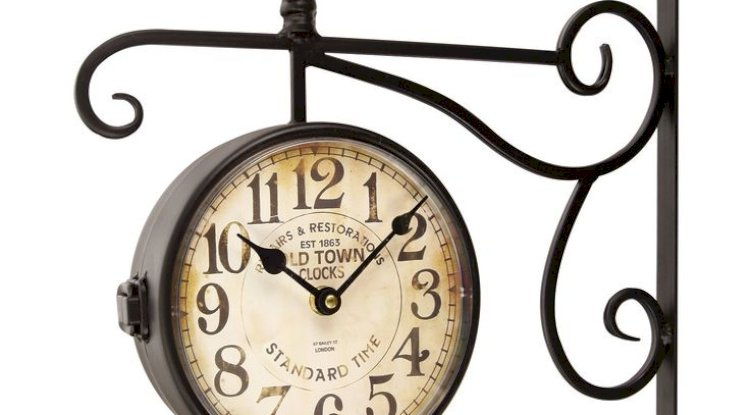
Clocks made in Europe initially used the power of weight suspension; their accuracy was not guaranteed due to the big size.” Pull Chain Devices” were invented to constantly maintain the unfastening vigour in springs. In 1504, Peter Heinlein created mobile clocks. In 1675, the basic model mechanism of the currently used mechanical clock was completed. In 1664, scientists Robert Hooke together with watch technician Thomas Tompion devised the ankle and temp of the hairspring.
From this, the base for modern clocks was laid. Later challenging progress was made towards miniaturisation and higher efficiency. The miniaturisation of clocks spread in the orient also. Japan became trained in seal cases. During the same time, Japanese people made pocket watches; but they lacked the technology and their mechanism required the import of goods. Accurate clocks became indispensable during the age of geographical discoveries in the 18th century. If time and location details about the constellation were unknown, it was difficult to locate the current location of ships. Such a highly efficient clock was accomplished by British carpenter, John Harrison.
The next giant leap was the entry of oscillation watches. Down in the 1960s, Swiss physicist Max Hetzel considered the method of combining small metal vibration with a clock’s timing. However, this method could not be understood by the Swiss. Hetzel sold it to America. At that time, America was competing with the Soviets exceeded in the launch of an artificial satellite. An accurate clock was vital to the launch of artificial satellites, therefore America adopted Hetzel’s clock in their satellite. This technology was used in wrist watch named “Accutron”. This was called a phoneme watch and was sold by the Bulova Company of America. At that time, mechanical watches were considered to be luxury; however, they had errors of 5 to 10 seconds per day. Accutron took pride in its phenomenal accuracy of less than 1 minute per month.
The Soviets were affected by not adopting Hetzel’s idea. Post World War 2, Japan focused on the development of the machinery industry and came into a position of exporting clocks and watches. As America did not have the mechanism patent, duplication was possible. Conversely, they have to develop a watch to a greater extent. The Technology patent of the phoneme watch was vested with Bulova company. Hence Swiss called max Hetzel who had worked with Bulova and asked him to develop accurate phoneme watches for them. On the other hand, Japan was researching the latest technology.
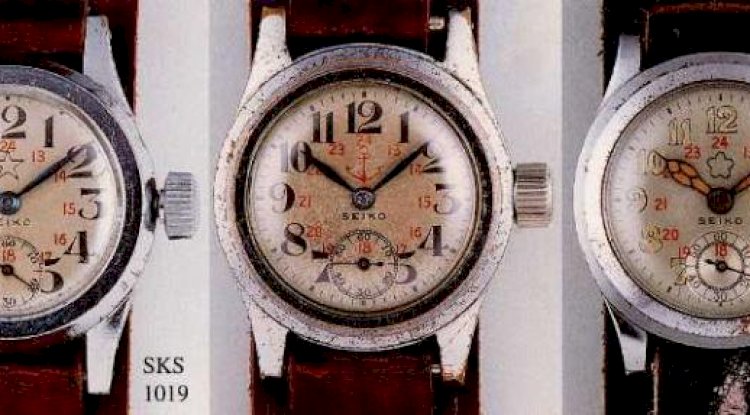
Watchmakers of Japan considered the idea of using a crystal for vibration instead of metal. But crystal watches were so big and occupied too much space and, hence had practical failures. This error was sei kosha (currently Seiko). In the 1960s, the grand success was equal to the condensation of a huge encyclopaedia into a petite make. In 1964, it was officially used in the Tokyo Olympics for recording time. Finally, in 1969, it became wristwatches and sold during Christmas. Today most wrist watches are “Quartz” crystal oscillators. Worldwide, Quartz watches “Astron” from Sowa Sei kosha were a practical success.
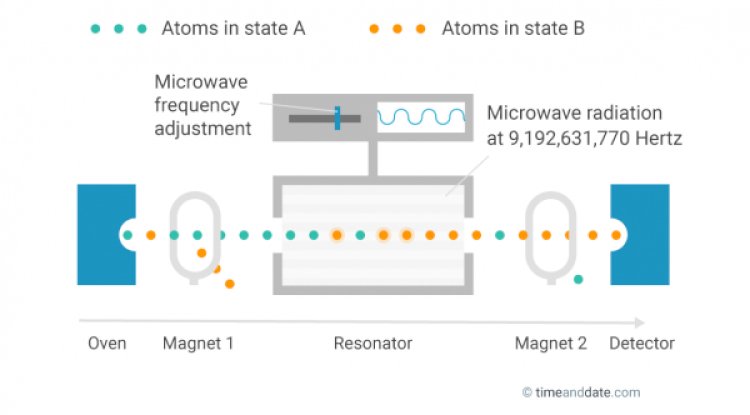
In the 1950s “atomic Clock” was found with an error range of 1 second in 3000 years. Still more advanced, one had an error range of 1 second in 3,00,000 years; the new clock has its error range of below 1 second in 20,000,000 years. The atomic clock contains a substance called “Caesium”. Electric waves were emitted when caesium changes to “Low energy condition”. The vibration of these electric waves is higher and more stable (91 hundred million and 92631770 times per second) than the frequency of crystal oscillators; hence accuracy is more than Quartz.
Nowadays there are many multi-function watches. The error range is 1 second 20,000,000 years. watches are becoming very accurate and multi-functioning. Advancement in the clock certainly keeps us ticking!
What's Your Reaction?