Why the US Is So Depressed Country?

The United States is probably too self-reliant a nation to ever believe a therapist when they say they're sick. That makes sense because it's a contradiction of mental health that those who require assistance the most frequently fail to identify their need for it. The best-known source of happiness and security, interpersonal relationships and a feeling of community are less prevalent in America. This fact won't change in our lives; instead, it will only get worse as our children become more and more dependent on electronic alternatives to interpersonal engagement. Mental disorder diagnoses in young adults are on the rise. In 2014, SAMHSA issued an all-points alert regarding the declining mental health of older teens and young adults and urged more of them to seek help. In 2016, young adults with mental illness continued its upward trend to new record levels.
America is the inverse of a hypochondriac: despite the obvious evidence, it consistently underestimates how badly it is hurting. What advice would you give a pal who displayed the following traits?
- Always, always on the go, seldom if ever taking a quiet moment to reflect.
- Willing to plunge deeper and deeper into debt to finance shopping sprees for nonessentials.
- The unshakable conviction that happiness is as close as the next stock split, breast augmentation, or Mazatlán vacation.

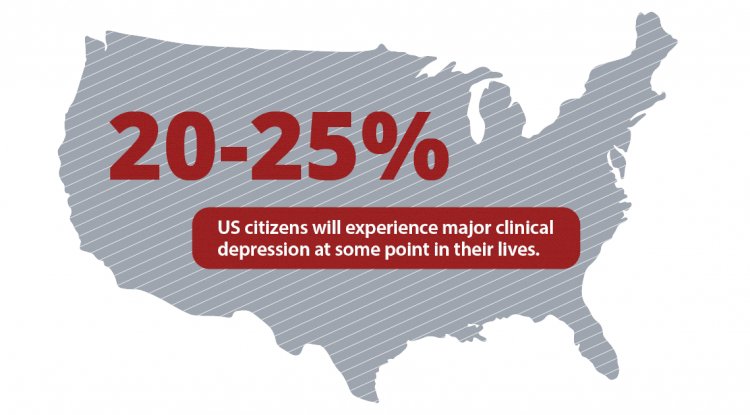
Martin Seligman, a psychology professor at the University of Pennsylvania and the president of the American Psychological Association, thinks that clinical depression is currently experiencing an "epidemic" in the United States. He claims that compared to one hundred years ago, an American is substantially more likely than ever to have clinical depression at some point in their lives.
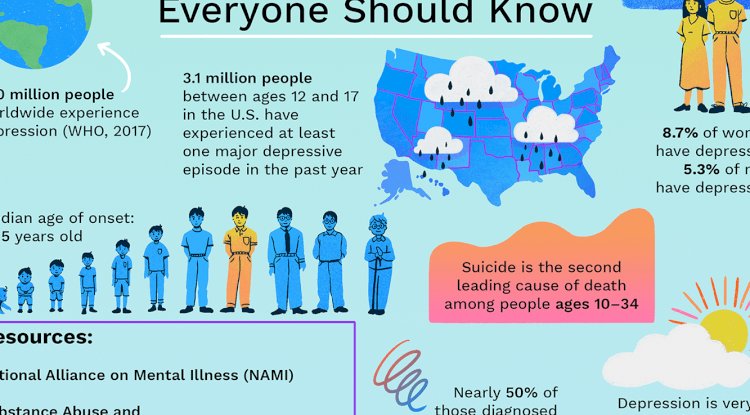
One of the most common mental illnesses in the U.S. is depression affecting more than 16 million Americans. Major depressive disorder is the leading cause of disability for people between the ages of 15 to 44 and it affects about 6.7% of all adults. People across a wide range of different demographics can be affected by depression. Middle-aged women have the highest rates of depression with the disorder being most prevalent among women aged 40 to 59. The lowest rates of depression are seen among teenage boys aged 12 to 17 and men over the age of 60. It is believed that hormone changes, genetic factors and personal circumstances can all contribute to the reason why women tend to experience depression more often than men.
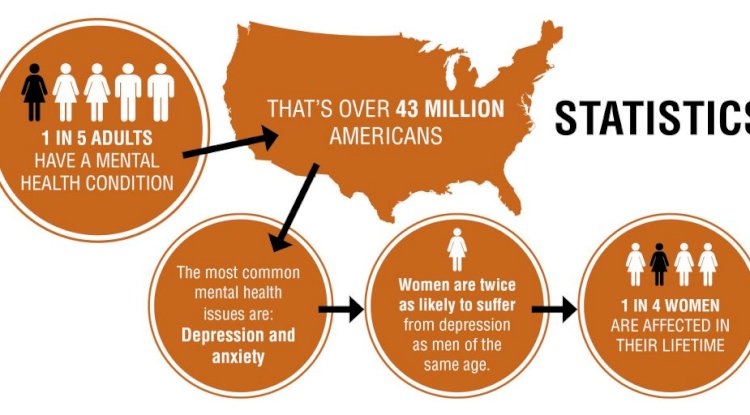
Although gender is a significant element in the demography of depression, other factors might also affect a person's likelihood of developing depression. According to statistics, depression is two and a half times more common in people living in poverty. This aspect may have to do with how environmental factors contributing to mental health issues make someone living in poverty more susceptible to a depressive episode. Additionally, sadness may be more common in some races and ethnicities than in others. The highest rates of depression are typically reported by those who are multiracial or have two or more races. The prevalence of depression among those with Native American ancestry is also very high.
Antidepressants falsely assert that they treat the causes of depression. Ketamine enables users to rearrange their cognitive processes and assign things a greater degree of seeming rational significance. Any pharmaceutical treatment for a mental health problem is likely to be ineffective, miss the majority of patients, and ignore the social and personal factors that contribute to depression. But as long as people are encouraged in their efforts to turn their altered perspectives of themselves and the world into a continuing strategy for living, psychedelics appear to offer the finest individual solution.
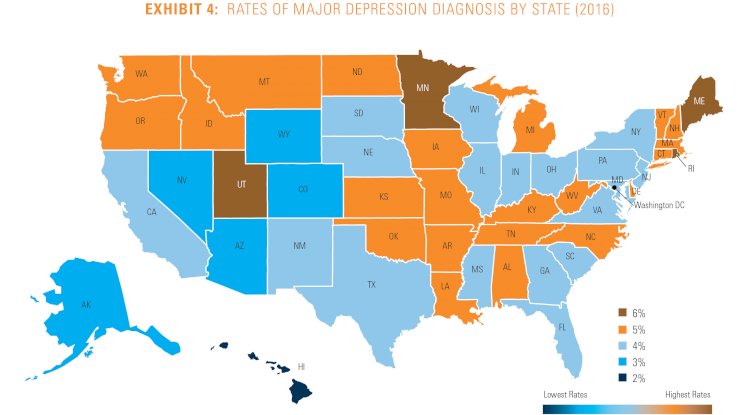
According to statistics on depression, people who have depressive episodes more frequently also tend to have a severe impairment. 10.3 million US adults, or 4.3% of all adults, were predicted to have at least one major depressive illness in 2016. These individuals experienced severe disabilities. In that year, 64% of persons who experienced a depressive episode did so with significant impairment. Less often than ideal, people receive treatment for their depression. A major depressive episode affected 37% of individuals who did not receive any form of treatment. Only roughly 44% of patients received both medical therapy and professional assistance. Only health professionals provided treatment to about 13% of patients, and 6 per cent received medication only.
Mental illness is a serious issue in the US, with poor treatment rates even among groups with a very high prevalence of depression. People in vulnerable demographics need to be aware of the signs of depression and the necessity of seeking professional assistance. Although depression may seem like a normal human emotion, anyone who routinely experiences it needs to speak with a therapist to get better.
Two centuries of philosophers stand in opposition to the modern American recipe for happiness and fulfilment. You can’t buy your way in. You can’t amuse yourself. You can’t even expect falling in love to deliver you. The most promising way to happiness is, perhaps, through creativity, through literally creating a fulfilling life for yourself by identifying some unique talent or passion and devoting a good part of your energy to it, forever. The trouble with being passive ticketholders in the media/entertainment pleasure plex is that we’re standing in a “happiness” line that isn’t moving. Now you must be asking yourself the question: What am I doing here?
What's Your Reaction?